‘The Soul of man under socialism’ is an essay written by Oscar Wilde in 1891. In this essay, he expounded his views on socialism and criticized the act of charity. Socialism a political, social, and economic philosophy encompassing a range of economic and social systems characterized by social ownership of the means of production. It includes the political theories and movements associated with such systems. Social ownership can be public, collective, cooperative, or of equity. He argued that under socialism, the abolition of private property would lead to a society in which individual would focus on personal growth instead of the accumulation of wealth. People would, according to him, have the possibility to realize their talents which would lead to individualism.
Victorian morality is defined as, “The distillation of the moral views of people living during the queen Victoria’s reign, the Victorian era and the moral climate of Great Britain in the mid-19th century.”. The values of the period such as religion, morality, Evangelicalism, industrial work ethic, and personal improvement—took root in Victorian morality.
In this blog, the essay, ‘The Soul of man under socialism’ in relation to Victorian morality is studied.
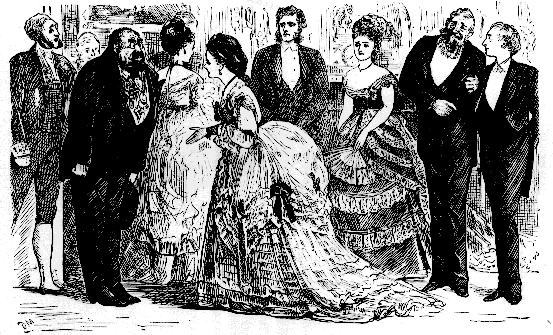
Oscar Wilde on Poverty
There was an enormous difference between the lives of the wealthy and the poor during the Victorian Era. Due to their abundance of resources, many wealthy individuals didn’t have to work. However, this was not the case for the impoverished individuals, who lacked homes and usually lived in workhouses. So, the rich helped the poor. It was the duty of these upper classes, wrote Victorian like Charles Dickens and Thomas Hardy, to help the lower classes.
Upper classes also founded institutions known as “Ragged schools”. It was for fostering various educational and other services for poor children, such as elementary schooling, industry training, religious instruction, etc. In addition to free education, many ragged schools also offered shelter, food and clothes for poor children. However, they rapidly died out after 1870. With the introduction of national compulsory education, a few remained into the 20th century.
Oscar Wilde in the essay, disagreed with the whole affair of helping the poor. According to him, in a capitalist society, people tried to treat only its symptoms, but not the disease. To him, poverty was one of the prominent symptoms. He explained that the lives of the poor will never improve permanently, no matter how much charity the poor and downtrodden received. He likened the situation to slavery. Even going to the extent of saying that the worst slave-owners were those who were kind to their slaves and so prevented the horror of the system being realized by those who suffered from it and understood by those who contemplated it.” What he meant was that the people who did the most harm were the people who tried to do the most good. According to him, a poor person who rebelled, was ungrateful and discontent had much in him than the others who just accepted charity.
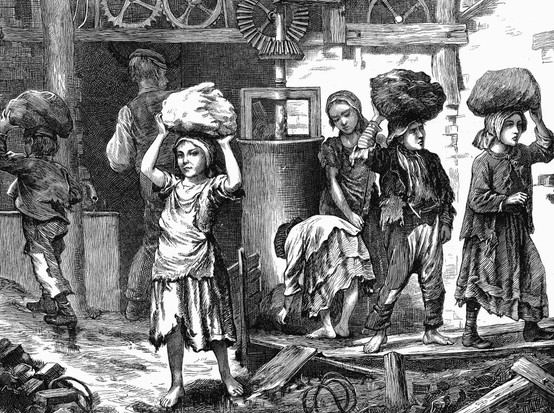
Misery and poverty are so absolutely degrading, and exercise such a paralyzing effect over the nature of men, that no class is ever really conscious of its own suffering. They have to be told of it by other people, and they often entirely disbelieve them. What is said by great employers of labor against agitators is unquestionably true. Agitators are a set of interfering, meddling people, who come down to some perfectly contented class of the community, and sow the seeds of discontent amongst them.
Socialism, according to Wilde, enabled every individual to accomplish personal goals without sacrificing oneself to others, especially to the poor, who are the inevitable product of the capitalist system. Wilde wanted to bring about such a redevelopment of society that poverty would be impossible. The security of society would not depend, as it did then, on the state of the weather. He believed that there would be no people living in fetid dens and fetid rags, and bringing up unhealthy, hunger-pinched children in the midst of impossible and absolutely repulsive surroundings. Each member of the society will share in the general prosperity and happiness of the society,
This also reminds one of Ayn Rand, a philosopher known for developing a philosophical system called objectivism. A robust social safety net can benefit both the individuals in a society and the society itself. Free of the fear of total impoverishment and able to meet their basic needs, people have a better opportunity to pursue long-term goals, to invent, create, and innovate. The core of Rand’s philosophy was that unfettered self-interest was good and altruism is destructive. Ayn Rand believed that those who rely on social systems are—to use her ugly term “parasites,” and those who amass large amounts of private wealth are heroic supermen.
Influence of Victorian Morality on the freedom of Artists
Wilde critiqued how Victorian society had oppressed the artists. Beginning in the nineteenth century, literature itself began to play the role, that religion once had. Dictators can oppress artists, but society can also do so through public opinion. This critique applies to people living under all types of governments. There emerged a belief that aesthetic consciousness was capable of organizing and transfiguring the whole of human experience. Writers had resorted to morality more than their predecessors. Reading became less of a privilege of the wealthy and more of a pastime of the British citizens. Publications of novels, periodicals flourished. Hence, it could be said that there was a certain pressure upon writers to write, keeping the Victorian morality in mind. Mathew Arnold claimed that literature had a moral purpose. His writings in later years mainly on religious concern.
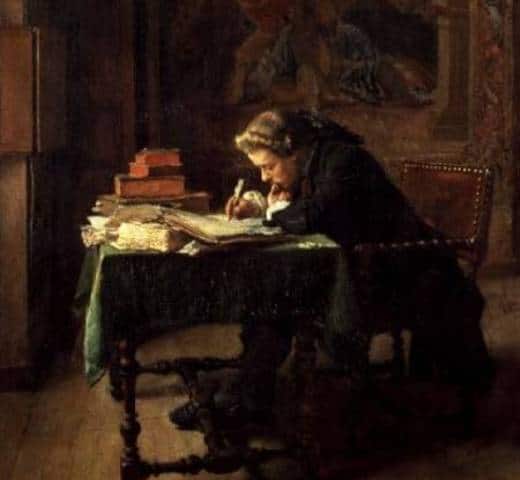
Oscar Wilde argued that the moment an artist took notice of what people want and tried to supply the demand, he ceases to be an artist, and just becomes a dull craftsman, an honest or dishonest tradesman. He wouldn’t work with interest or put out his best work because he was doing it for others. So, he opined that art should not be popular or try to cater to the taste of the public. The public ought to make itself more artistic. Therefore, in England, according to him, at that time, the arts that had escaped best were the ones in which the public had no interest.
The Victorians held homosexuality in horror and had introduced homosexuality laws in 1895, criminalizing all male homosexual acts with severe penalties. Oscar Wilde was arrested after losing a libel case against the Marquess of Queensberry. Wilde had been engaged in an affair with the marquess’s son since 1891, but when the outraged marquess denounced him as a homosexual, Wilde sued the man for libel.
‘The Picture of Dorian Gray’ was considered homoerotic and suggestive. Many critics, including the Daily Chronicle on June 30, 1890 said that there is, “one element which will taint every young mind that comes in contact with it. The first edition was more suggestive to the readers, and Wilde quickly responded by adding chapter to give more background to the characters. While much of the uproar was directed at the homosexuality of not only themes in the novel but Oscar Wilde himself, there was also a stir over the immoral influences. Many attempted to argue that the acts encouraged by Lord Henry were damaging to those who read the horrifying story of young Dorian Gray. Wilde used ‘The Picture of Dorian Gray’ as his autobiography claiming, “Basil Hallward is what I think I am: Lord Henry what the world thinks me: Dorian what I would like to be- in other ages perhaps.”
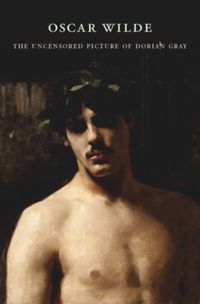
There is no evidence that disgust towards homosexuality declined over the years in the Victorian era. The capital punishment for sodomy was supplanted with life imprisonment only in 1861. A proposal to abolish it ran into parliamentary resistance in 1841 and was aborted. Historians had also documented incidents where those convicted of homosexuality have been victims of mob violence.
‘There is no such thing as a moral or an immoral book. Books are well written or badly written. That is all’. This was stated by Oscar Wilde in the preface of ‘The Picture of Dorian Gray’. In other words, any moral disgust or vicarious pleasure derived from the book reflects more upon us as readers than it does on the novel itself.
It should also be noted that Oscar Wilde was one of the pioneers of aestheticism movement. The movement was purely art for art’s sake. The controversial theory of art that was newly fashionable at this time, was that art should be judged purely by its beauty and form rather than by any underlying moral message.
Therefore, he argued that socialism will allow everyone to make “what is beautiful” while machines accomplish the work that slaves in ancient Greece and Rome performed. In other words, when people are free from demanding jobs and insecurity, then everyone will be free to pursue their interests.In a socialist society, people will have the possibility to realize their talents. Socialism will lead to Individualism.
Use of Christianity to justify Socialism
If there was any single belief that characterized the Victorian era it was Christian belief. Religion pervaded social and political life. Morality until recently has been seen as a brainchild of religion and thus an essential part of religion from which it is inseparable.
It is Wilde’s views on religion that are so interesting in connection to the themes of politics and belief. Where others might have faith in the unseen and intangible, the great unknown or whatever, Wilde confessed a more aesthetic fidelity to “What one can touch and look at.”
British thinkers developed Christian socialism in the late 1840s, and the ideas quickly spread to mainland Europe. Christian socialism states that people should work together to create a more egalitarian society.
Wilde used some Christian socialist ideas as a persuasive device. He made an impassioned argument regarding what Christ hoped that each person could achieve. Wilde argued that Christ’s central message was “Be thyself,” or know yourself and become what you were meant to be. However, no economic or political system in the preceding 1,800 years could allow people to achieve this goal. Wilde described Christ as a “beggar who has a marvelous soul”, a “leper whose soul is divine”. Christ was “God realizing his perfection through pain”. Wilde believed that Christ would want people to adopt socialism for what it could provide them spiritually. For Wilde, Christ was the supreme romantic artist, a poet who makes the inward outward through the power of the imagination. Wilde went even further, saying that Christ made himself into a work of art through the transfiguration of his suffering in his life and passion. Christ created himself as a sublime work of art by rendering articulate a voiceless world of pain.
References-
1)Buzwell, Greg. “Library British.” The Picture of Dorian Gray: art, ethics and the artist, 2014, https://www.bl.uk/romantics-and-victorians/articles/the-picture-of-dorian-gray-art-ethics-and-the-artist. Accessed 29 January 2022.
2) AboutBritain. “AboutBritain.” Poverty in Victorian Times, 2018, https://www.aboutbritain.com/articles/poverty-in-victorian-times.asp. Accessed 26 January 2022.
3)Giudicelli, Xavier. “OpenEditionJournals.” Aesthetics and Politics: The Afterlives of Oscar Wilde’s The Soul of Man Under Socialism (1891), 2017, https://journals.openedition.org/erea/5129. Accessed 19 January 2022.
 Food
Food 